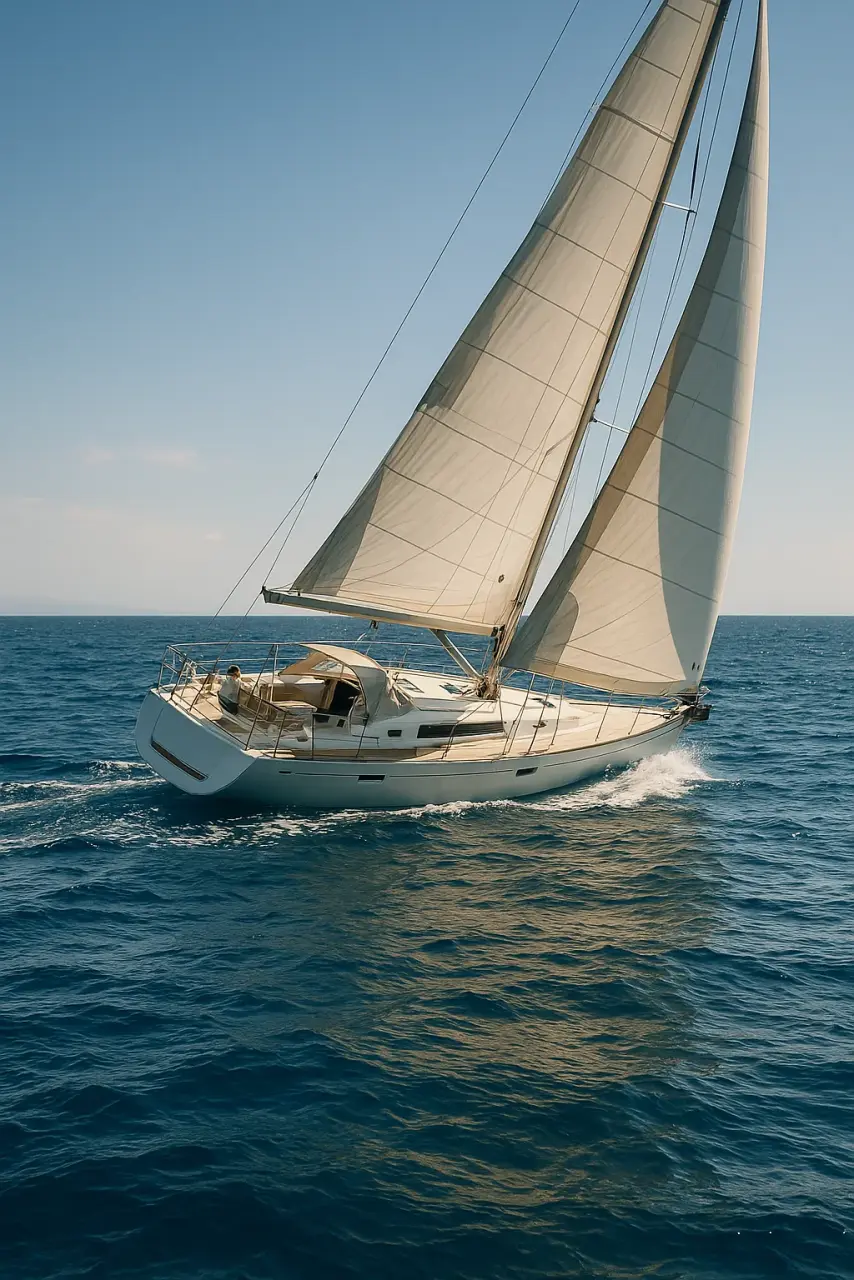
Charter or buy a yacht?
Charter for flexibility, buy for regular use — often, charter first.
Key takeaways
- Charter or buy depends first on the number of days on the water per year.
- Below two to three weeks, chartering is almost always simpler and cheaper.
- Buying makes sense for regular use — accepting ~10% of value a year in running costs.
- The safest path: charter first across several types before you buy.
Two ways onto the water
Should you charter or buy? It depends on how often you will use a boat and your appetite for ownership. There is no single answer: it resolves by looking honestly at how you will cruise, how many days a year, and whether you want “your” boat waiting or prefer the right boat for each occasion.
Charter
Chartering suits anyone who wants the sea for a few days or weeks a year, without the cost and management of a boat: berth, crew, maintenance, winter storage. You choose the right boat for each occasion — a fast day-boat for a run to the Lérins, a motor yacht for lunch at anchor, a larger crewed yacht for a family week.
Buying
Acquisition makes sense for regular use and the pleasure of ownership, but carries real costs. Beyond the purchase price come the berth, crew on larger yachts, maintenance, winter storage, insurance and depreciation. We often advise starting by chartering different types before buying — to learn exactly which boat suits you.
Charter or buy: the comparison
| Criterion | Charter | Buy |
|---|---|---|
| Fixed costs | None | Berth, crew, upkeep, storage |
| Commitment | The length of the trip | Over several years |
| Choice of boat | Different each time | One only, yours |
| Management | Zero | Yours (or delegated) |
| Rough threshold | < 2–3 weeks/year | Regular use |
The question of days of use
The best guide is the number of days on the water per year. Below two or three weeks, chartering is almost always simpler and cheaper: no fixed costs, a different boat for each occasion, zero management. Above that, and especially for regular family use, buying starts to make sense — provided you accept the costs that come with it.
The full cost of each option
Chartering means paying an all-in rate (yacht and crew) plus the APA, with no commitment beyond the trip. Buying means tying up capital and then carrying the berth, crew, maintenance, winter storage, insurance and depreciation — often around 10% of the boat’s value a year. Placing an owned yacht in charter can absorb part of that, but never all of it, and means accepting that others cruise on your boat.
The middle path
For many, the right answer is not binary: charter first for several seasons, try a day-boat, a motor yacht, then a sailing yacht, and only buy once the usage profile is clear. It is the approach that avoids the most expensive mistake of all — the wrong boat.
Our advice
Count your days at sea before you count your budget. If you are unsure, charter for a season: it is the cheapest way to answer the question, and often the most revealing. We help you charter the right boat today, then buy the right one — if and when it makes sense.
Is it better to charter or buy a yacht?
It depends on the number of days on the water per year. Below two to three weeks, **chartering** is almost always simpler and cheaper: no fixed costs, a different boat for each occasion, zero management. Above that, and for regular use, **buying** starts to make sense — provided you accept the costs that come with it.
How many days of use make buying worthwhile?
There is no universal threshold, but around two to three weeks of use a year the balance begins to tip toward buying for those who value ownership. Below that, chartering is usually the better deal. The best move is to charter for a season before deciding.
Can chartering an owned yacht offset its costs?
Partly. Placing a yacht in **charter** for part of the season can absorb a fraction of the costs — berth, crew, maintenance — but never all of them, and means accepting that others cruise on your boat. We help you assess that potential before you buy rather than after.