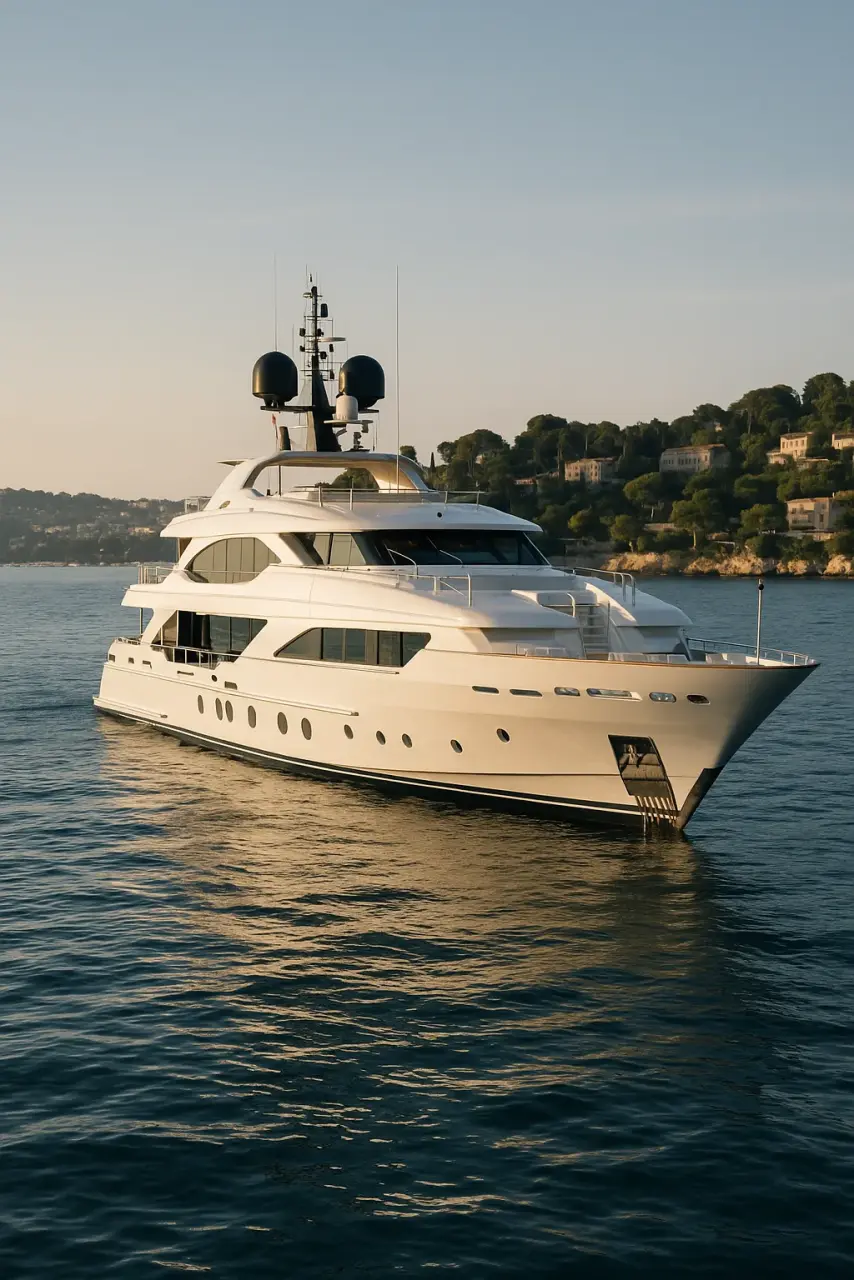
Crew and services on board
Captain, deckhand, chef and stewardess — and the local knowledge that makes it.
Key takeaways
- On a crewed charter you handle nothing: captain, deckhand, chef and stewardess.
- The real luxury is local knowledge: where to anchor, when, and how to time the day.
- A day-boat can sometimes be hired without crew; as size grows, a skipper becomes the norm.
- The tip (5–15%) is at your discretion; meals and drinks fall under the APA.
What a crew does
On a crewed charter you handle nothing. The captain runs the boat and builds the itinerary around you; a deckhand manages the tender, the water toys and the deck. On larger yachts, a chef cooks to your taste and a stewardess service runs the interior. The aim is simple: the only thing you have to think about is enjoying the day.
Local knowledge
The best service comes from knowing the coast: where to anchor in calm, which beach club is worth the detour, how to time the day to the wind. It is that local experience — from a crew who sail the Bay of Cannes all year — that separates a simple outing from a genuinely good day. Tell us your preferences (meals, pace, destinations) and the crew builds the day around them.
With or without crew
A day-boat can sometimes be hired without crew if you hold the right coastal licence; as soon as size increases, chartering with a skipper becomes the norm. A skipper knows the local navigation rules, the permitted anchoring zones and the best spots for the wind — it is the skipper who turns an outing into a genuinely good day. On yachts from around fifteen metres, a full crew is essential.
Who does what on board
On a large charter the crew works behind the scenes so you organise nothing. Each has a role:
| Role | What they do |
|---|---|
| Captain | Itinerary, safety and helming |
| Deckhand | Tender, water toys (paddle, sea-bob, ski), deck upkeep |
| Chef | Meals around your tastes and dietary needs |
| Stewardess | Service, cabins and the comfort of the interior |
On the largest yachts the team grows (mate, galley, service); on a day-boat with a skipper, one person carries these roles.
Tipping and the APA
It is customary for a crew tip, in the region of 5–15% of the charter fee, to reward the service at the end of the trip; it remains at your discretion. Costs for meals and drinks on board fall under the APA, separate from the crew’s wages, and are reconciled at the end against actual spend.
Our advice
A good crew is invisible: it anticipates. Tell us how you like to spend a day at sea — calm and swimming, a careful table, water toys for the children — and we choose the boat and crew that make it all simple.
Do I need a crew to charter a yacht?
A **day-boat** can sometimes be hired without crew if you hold the right coastal licence. As size increases, **chartering with a skipper** becomes the norm, and on yachts from around fifteen metres a full crew — captain, deckhand, sometimes chef and stewardess — is essential.
What does the captain do on board?
The **captain** runs the boat, handles safety and builds the itinerary around you: choosing anchorages by the wind, knowing the coast and coordinating the rest of the crew. It is that local knowledge that turns an outing into a genuinely good day.
Is the crew tip mandatory?
No, it remains at your discretion. It is customary to give a **crew tip** of around 5–15% of the charter fee at the end of the trip to reward the service. It is separate from the **APA**, which covers fuel, meals and berths.